
Succulent Care in India: Sun, Soil and Monsoon Survival
Keep succulents compact and healthy through strong sun, humid monsoon weather and container heat.
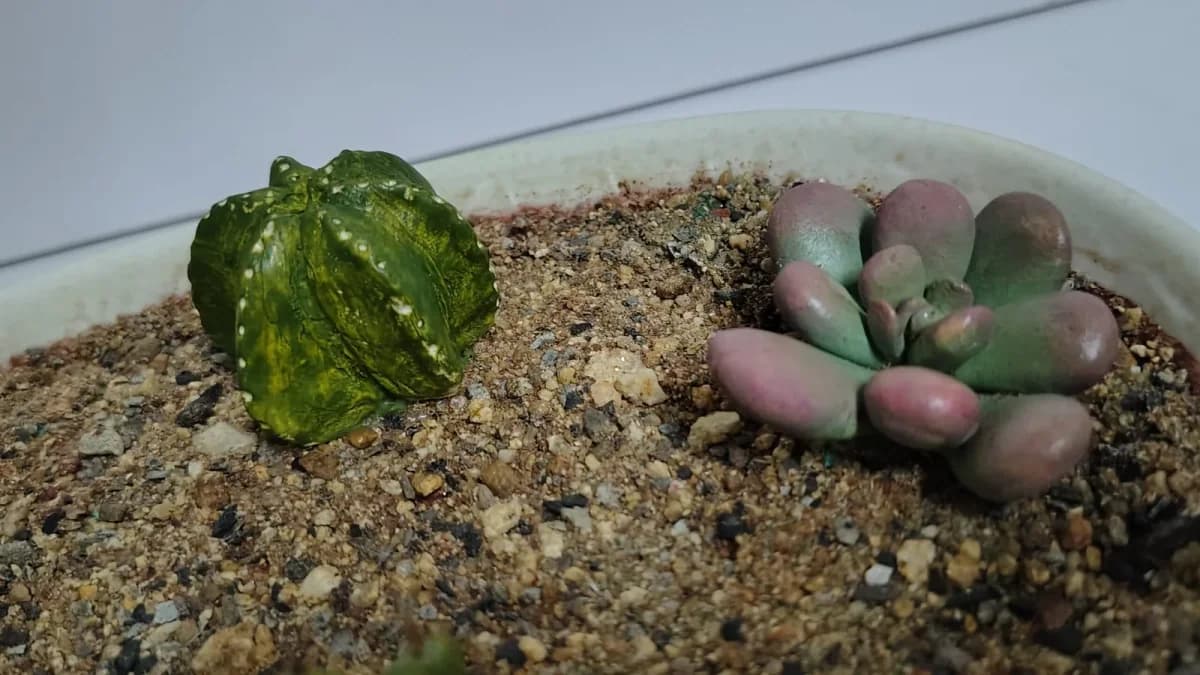
Quick answer: Give succulents several hours of appropriate bright light, a mineral-rich fast-draining mix and a full wet-to-dry watering cycle. Protect them from prolonged monsoon rain and acclimate nursery plants before exposing them to intense sun.
Light without scorch
- Increase sun gradually over one to two weeks.
- Watch for stretching and flattened colour in low light.
- Protect tender varieties from harsh afternoon heat.
Build a fast root zone
- Use a high mineral fraction.
- Choose pots with drainage.
- Avoid decorative glass containers without holes.
Monsoon strategy
- Move pots under a bright rain shelter.
- Increase spacing and airflow.
- Pause watering until the root zone dries.
Common mistakes to avoid
- Daily misting
- Deep shade because the label says indoor
- Large pots full of moisture-holding soil
What to do next
- Measure your light or inspect the affected plant.
- Check roots, drainage and moisture before buying a treatment.
- Choose one correction and document the result.
Frequently asked questions
Why is my succulent tall and thin?
It is usually stretching for more light.
Can succulents handle rain?
Brief rain may be fine, but repeated saturation is risky.
When should I water?
After the mix dries to the level appropriate for the species and pot.
Shop with soil fit: Shop succulent soil and sets.
Recommended for this guide
Hand-picked essentials matched to this guide, delivered with soil-fit care support.

Low-Tech Aquarium Plant Trio

Brahmi Herb Garden Starter Kit

Beginner Pothos + Soil Starter Kit
Keep reading
Related plant guides
Planted Tank Secrets: How Snails Save Your Aquatic Plants from Melting
When new aquatic plants melt, amateur hobbyists panic. Discover how Ramshorn and Nerite snails act as natural biological filters to salvage your aquascape.
Ayurvedic Biophilia: How Growing Tulsi and Brahmi Alters Your Indoor Micro-Climate
Holy Basil (Tulsi) and Indian Pennywort (Brahmi) are more than therapeutic herbs. Explore the science behind their biophilic volatile compound emissions.
The Nitrogen Lie: Why Synthetic NPK is Slowly Poisoning Your Living Soil
Synthetic chemical fertilizer gives a fast green burst but leaves your soil sterile. Read how to save your soil food web using natural leaf compost and microbia